CONTROL Resonant Warped Manhattan Map
Open-ended zones, Faults, hanging streets, and what is not a true open world.
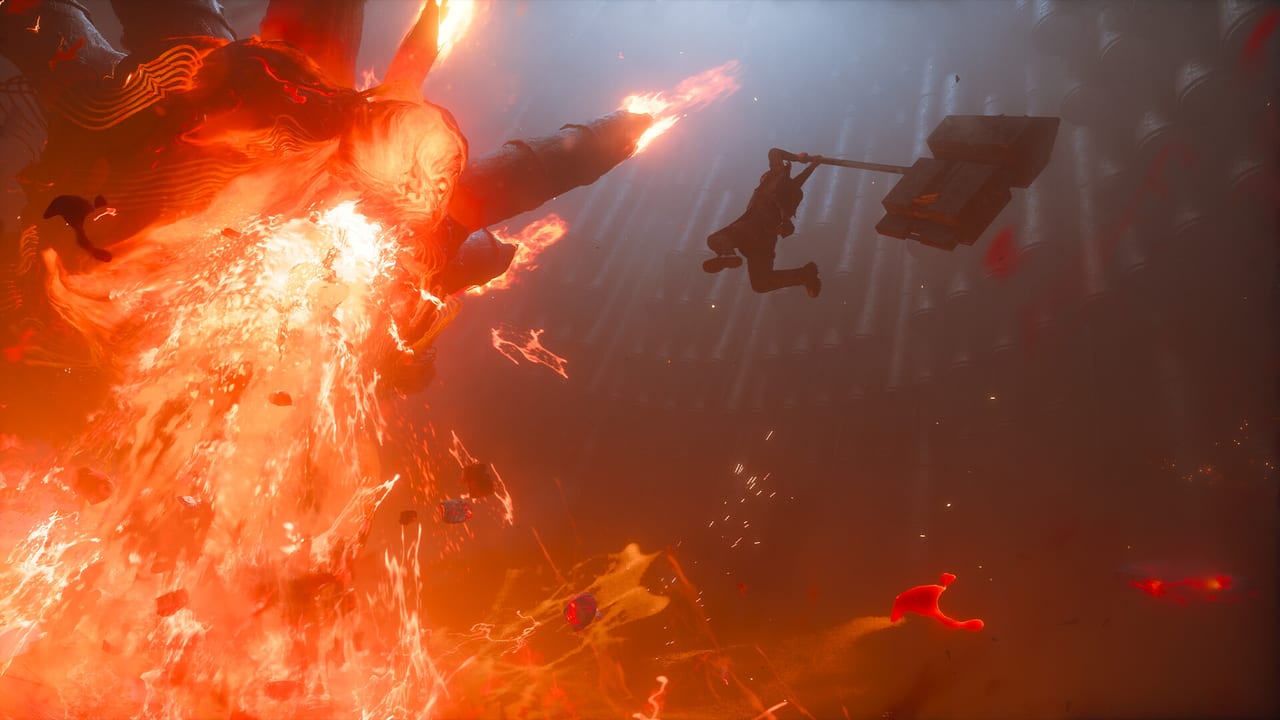
CONTROL Resonant leaves the Oldest House for a paranaturally warped Manhattan. Remedy refuses the phrase “open world.” Lead gameplay designer Sergey Mohov describes large, distinct, expansive zones packed with side activity, hidden encounters, and optional discoveries. This page is the map primer: how the city is organised, what a Fault is, why gravity lies, and which hubs to open after you pick a district.
Digital launch is still 24 September 2026. There is no public interactive map with every collectible pin, and this wiki will not invent street names Remedy has not published. Use it to understand structure, then jump to Metro Fault for the one dungeon shown end-to-end, traversal for Shift and Reach, and Getting Started for the House-to-street opening.
Open-ended, not open world
The first CONTROL was a brutalist megastructure. Resonant inverts that: Dylan Faden steps outside after years as a prisoner and finds the city itself behaving like an Object of Power. Buildings hang at 90 and 180 degrees. Roads become walls. Time, light, and even “how people think” warp under a new hostile resonance — the Pattern / Patterning — while the Hiss and the Mold spill into streets the Bureau used to contain indoors.
Play loop in plain language:
- Overworld zones you can roam in a flexible order, picking World Quests and Bounties.
- Faults (dungeons) that lock a traversal upgrade or a story spike behind a gauntlet.
- The Gap, Dylan’s mind-space, reachable by holding Down on the d-pad, for respecs rather than fast travel.
- Oldest House remnants — Remedy has said previously unseen House sections still appear; the city did not delete the Bureau, it broke the seal.
If you came here looking for a minimap legend, start with zone fantasy instead of grid coordinates. Preview reports talk about a West Incursion Zone and other distinct Manhattan slices, each with its own enemy density and side activity. Exact in-game labels may still shift before 24 September.
Gravity Anomalies and fake ground
Traversal is half the map. Gravity Anomalies flip what counts as a floor. Shift lets Dylan reorient and sprint along what used to be a facade. Reach, unlocked in Metro Fault, is the hook that turns hanging rooftops into a path. Double jump, hover, and air dash fill the rest.
Map-reading tips from hands-on coverage:
- Look up and behind before you assume a dead end. The “street” might be on the ceiling.
- Use Shift when a train, bus, or debris field occupies the original axis — TechRadar’s preview even describes a possessed bus in warped streets.
- Do not dump every side alley before you own Reach. Vertical districts open after Faults, the same way House sectors opened after hotline upgrades in 2019.
New Game Plus does not carry traversal. A second Manhattan run re-teaches the city’s grammar on purpose. Combat progression persists; the map’s verbs do not. Details sit on builds.
Faults as dungeon layer
IGN First called Faults “essentially dungeons.” Metro Fault is the published example: subway, Mold, trains on every axis, Reach at the end, fast travel after. Other Faults exist around the city. Treat them as the sequel’s replacement for the Oldest House’s longest side sectors — optional in routing, mandatory if you want the full movement kit.
When a Fault is nearby, Zoe de Vera is usually the radio that tries to talk you out of it, then briefs you through it. Follow her, then ignore the warning if you want the skill. Resonant is single-player; she cannot hold a checkpoint for you.
Threats that rewrite blocks
- Hiss — the original infection, now loose on avenues instead of office floors.
- Mold — invasive micro-organism, fungal fighters, Metro Fault’s main trash-and-elite mix.
- Pattern / Patterning — new resonance that restructures architecture with an otherworldly algorithm. Resonant bosses often sit at a Pattern epicenter; see Resonants.
- Environmental objects — trains, buses, inverted interiors. These are map features and attack patterns at once.
Emily Pope’s trailer narration (acting co-director while Jesse Faden is missing) frames the city as both terrifying and fascinating. That is the tone of exploration: catalogue the weird, then hit it with the Aberrant. Loadouts live on the combat page and the Aberrant forms list.
How long the map takes
Remedy’s public estimate is still about 30 hours for the core story and up to 50 hours if you chase World Quests, Bounties, collectibles, and extra Faults. That is why this wiki splits map literacy (this page), dungeon routing (Metro Fault), and boss gates (Resonants) instead of one 8,000-word dump.
What we will not fake
No invented borough checklist, no leaked collectible GPS, no “best farm street.” When Remedy publishes a zone name in UI, we will use that string. Until then, navigate by verbs: Shift, Reach, Fault, Pattern epicenter, Gap. For dates and storefronts use release date and Official Links. Platforms and editions sit under Tools.
Manhattan in Resonant is the sequel’s protagonist almost as much as Dylan. Learn its lying gravity, clear the Fault that teaches Reach, then let combat happen on whatever surface currently counts as down.
Frequently Asked Questions
Quick answers for launch week, pre-orders, and first-hour combat.
Is CONTROL Resonant an open-world game?
No. Remedy calls it open-ended: large distinct Manhattan zones with optional activity, not a seamless open world.
What is a Fault?
A dungeon-style challenge. Metro Fault is the published example and unlocks Reach, the grappling-hook traversal skill.
Do I need Reach to explore the whole city?
Vertical and inverted districts want Reach plus Shift. Clearing Metro Fault before you try to 100% a hanging block will save backtracking.
Is there a full interactive map yet?
Not publicly. This page covers structure from trailers and IGN First. Launch-day UI names may still change before 24 September 2026.